Uncategorized

Paleo Molasses Cookies!

I developed this recipe myself, although I did incorporate two other recipes (The Best Almond Flour Cookies and Molasses Cookies).

In 2020 I was diagnosed with an autoimmune condition and I started eating paleo. I was very strict at first, but after the first year or so I let myself have more treats. But I was disappointed when I would buy “healthy” cookies, and they would *taste* like “healthy” cookies. They just weren’t worth it. I would buy a package and only eat 1 cookie out of it and then try to pawn the rest off on someone else. 😉

So I decided to try making my own! These are the kind of cookies that you just want to eat and eat and eat and eat! I made most of the dough into balls and froze it so I could make small batches more often (but so far I’ve just been eating the frozen dough!).

If I did the math right, I think these are only about *2* grams of sugar per cookie! (But I made them small.)

Ingredients:

  • 1 cup Miyoko’s cultured vegan butter (salted)
  • 3 eggs
  • 1 cup packed light brown sugar
  • 3/4 cup molasses
  • 2 tsp baking soda
  • 5 1/4 cups almond flour
  • 5 1/4 tsps pumpkin pie spice (not exactly the spices you should use for molasses cookies, but it’s what I had. You can experiment with what you like. 🙂 )
  • Dash of salt

Directions:
Preheat oven to 350. Cream together “butter”, eggs, and brown sugar. Add molasses. Mix your dry ingredients together and then mix in to your wet ingredients. Bake for 10 minutes at 350.
Yield: about 13 dozen, small (about 3 inch diameter) cookies

~~~~~~~~~~~~~~~~~~~~~~~~~~~~~~~~~~~~~~~~~~~~~~

If you try these, please let me know in the comments!

And if you’d like a cheerleader who understands your health journey, contact me and let’s talk!

Standard
Uncategorized

“The Curse of Oak Island” TV Show Fitness Game

As we approach the premiere of the 10th Season of “The Curse of Oak Island” (next Tuesday night, November 15th!), I thought I’d share a little game I put together.

If you’ve watched the show, you know there are certain phrases they repeat frequently. 😉 So I thought I’d take advantage of that! (Fair warning, you won’t get much chance to sit down!)

***Obviously be careful and don’t hurt yourself! If you can’t do burpees or squats (for instance) feel free to modify 🙂

  • Anytime they’re recapping – walk in place (including for the show intro)
  • Archaeology Trailer/XRF area – hold plank the whole time they’re in there (you’re allowed breaks to do other actions if they start recapping or saying keywords 😉 )
  • Bobby Dazzler – 5 burpees
  • “Potentially” (as in “potentially important discovery” or “potentially historic find” 😉 ) – 5 pushups
  • Swamp – drink some water
  • Top Pocket Find – 10 squats
  • War Room – Hold Tree Pose the whole time they’re in there (switch sides at some point)

If you try it out, let me know what you think in the comments!

Standard
Uncategorized

UPDATED Holiday Nog Reviews

(I originally tasted and reviewed most of these for the holiday season of 2017 (on a different blog). I didn’t realize it was so long ago, but I don’t think the products have changed. I updated the post though, so anywhere it says “last year” really is last year (2021).)

I really like eggnog. 🙂 I used to drink it from the time it’s first in the stores around October, until it’s no longer in the stores around January. 😉 But now I’m avoiding milk, so regular eggnog is “off the table”. 😉

Make your own ~ Last year for Thanksgiving, I actually made vegan eggnog! I’m not currently vegan so I could have used eggs, but I was concerned about using raw eggs and the recipes with cooked eggs seemed tricky. I found this recipe for vegan nog and it’s really good! Even non vegan family members liked it. 🙂

Califia Farms Holiday Nog ~ Last year, I saw this nog that I’d never tried, so I impulsively grabbed it. It is the best store bought vegan “egg” nog! I bought some again yesterday! It’s admittedly not as creamy as real egg nog (more like 2% milk than cream, if you know what I mean) but it uniquely has the right flavour. 🙂 There’s something sort of tangy about it that really tastes like egg nog. 🙂 (And, this is far less important, but it’s the right colour too.)

So Delicious Coconut Milk Holiday Nog ~ This is pretty good! Thick and rich, and doesn’t really taste like coconut! I like that it has flecks of real spices in it as well. 🙂 Visually it’s not quite the right colour for egg nog, and it’s a bit sweet, but overall, I think this is a good vegan substitute. It has a bit of graininess to it.

Almond Breeze Classic Almondmilk Nog ~ I like this one! 🙂 I will say though, it tastes more like milk and not so much like eggnog. Compared to the So Delicious Coconut Milk Holiday Nog, this has a smoother/better texture, but hardly any flakes of real spices. It’s maybe slightly less sweet, but overall seems less flavourful. Still good, but not great. Definitely tastes good, just not very eggnoggy, like I said. I just went back and had some more of the So Delicious, and I think that one’s better so far, despite the graininess.

Silk Nog Original ~ I expected to like this one the best, because generally the taste and texture of soy is more like “real” milk than almonds and coconut. But it turned out to be my least favourite. Visually, it looks the most like real eggnog, except again, not enough spice flecks, although you could fix that at home. But this one is thinner than the other two, and just has a funny flavour to it. Actually, I think that flavour is just soymilk. ACTUALLY, now I feel stupid and ripped off, because here are the ingredients: “Soymilk (filtered water, soybeans), cane sugar, locust bean gum, sea salt, natural flavor, turmeric and annatto (for color).” Is it just me, or is that basically just soymilk?!? The back of the carton says “ring in the season with notes of nutmeg and cinnamon and the smooth, velvety flavor of Silk Soy Nog”. Where’s the nutmeg and cinnamon?!? 😉 Unless they’re included in the “natural flavor”, but the other “nogs” list spices in the ingredients. Actually, the carton does *not* say that those spices are included, it says to ring the season in with those spices AND Silk Soy Nog, so maybe it’s like a “batteries not included” kind of thing. 😉

Conclusion ~ I would say don’t waste your money on the Silk Soy Nog, unless you want to fix it up with some more flavour, because it really does just taste like soymilk. Except there’s also a weird feeling to it, like it kind of coats my mouth. :/

Between the coconut and almond milk nogs, I do slightly prefer the So Delicious Coconut Milk Holiday Nog, but I think the Almond Breeze Classic Almondmilk Nog is good too, and some of you might even like it better. But Califia Farms wins 🙂

I hope this helps you, and I wish you a very merry holiday season!

Standard
Uncategorized

The Blood Type Diet

At least two people have asked me about the blood type diet, and my reaction was skeptical.

It just didn’t seem that there could be anything about different molecules on the surface of your blood cells that would affect what diet you should be on.

But, I decided to give it a chance. So, I checked out “Eat Right 4 Your Type” by Dr. Peter J. D’Adamo from my local library.

One of the first things I noticed was the summary of the diets on the back of the book. Depending on your type, you are recommended to engage in different kinds of exercise, ranging from “vigorous” to “gentle”, and in the diets that include meat, it says to eat “grass-fed, free-range meat”.

So right away I could see that the book was recommending healthy things, so it didn’t surprise me that some people had great success with this diet. (Once I read it, I found out that the diets are more complicated than the back-of-the-book summary leads one to believe.)

The book also claims that there’s no one-size-fits-all solution: different people do better with different diets. I *absolutely* agree with that (although I do think there are commonalities among healthy diets). Dr. D’Adamo says “If you’ve ever suspected that not everyone should eat the same thing or do the same exercise, you’re right.”

He also says “Although we have seen with our own eyes that certain people respond very well to particular diets while others do not, we have never made a commitment—in science or nutrition—to study the specialized characteristics of populations or individuals that might explain the variety of responses to any given diet.” I have heard that maybe someday there would be a blood test to help us determine that, so it’s intriguing to me that maybe there already is!

I’m going to start with things I did NOT like about the book, but there are some things I liked, so keep reading for those. 🙂

Things I didn’t like:

Some of D’Adamo’s claims seem like a bit of a stretch. He paints a historical picture of how the different types evolved around the world, and although part of it makes sense, part of it doesn’t (at least to me).

Some things he says are contradictory. At first I was giving him the benefit of the doubt that I just wasn’t understanding him, but no, some things are actually contradictory. For instance, the following statements (these are both from the same page (302 in the 2016 edition) Emphasis added): “It has been observed that viral infections in general seem to be more frequent in Type Os because they do not possess any antigens.” “Comparing transmission to bad transfusion reactions, scientists proposed that it is harder for Blood Type O individuals to contract HIV infection from people of other blood types because they carry both anti-A and anti-B antigens in their blood. On the other hand, Type AB, with no opposing blood type antigens, would more easily contract HIV from other blood types.” So at first he states that Type O has no antigens, and then he says that they have antigens to A and B. In other places he says that Type O is generally weak against viral infections, so the first statement about Type O being susceptible to viral infections makes sense, just not the phrase “because they do not possess any antigens”.

Next, I object to his bad advice in one particular circumstance: “Antibiotics are ineffective in the treatment of mononucleosis because it is caused by a virus, not a bacteria. Bed rest while the fever lasts and frequent rest intervals during the one- to three-week recovery period are recommended. Aspirin and adequate fluid intake are encouraged to decrease fever.” In this section D’Adamo is discussing childhood illnesses. Now, I’m no expert on this, but I was told you should never give aspirin to children because of the risk of Reye’s syndrome. So, I looked it up, and according to the Mayo Clinic “Aspirin has been linked with Reye’s syndrome, so use caution when giving aspirin to children or teenagers for fever or pain”.

Lastly, D’Adamo provides menus for the different types. However, he provides this disclaimer: “Occasionally you will see an ingredient in a recipe that appears on your avoid list. If it is a very small ingredient (such as a dash of pepper), you may be able to tolerate it, depending on your condition and whether you are strictly adhering to the diet.”

I understand that every diet needs some flexibility, and several times I have tried (with varying levels of success) to adapt different recipes to different diets. But since these are recipes that are specifically designed for the specific blood types, WHY would they have ingredients that those people are supposed to avoid?!?

Also, the meal plans included alternatives for if you want lighter food or weight loss. But I was disappointed again, because many of the alternatives were your typical diet foods, like rice cakes. Especially for Type O, that disappointed me, because rice cakes don’t seem to fit the paleo model. Also, some of the substitutions reduced fat, but also protein and nutrients, like swapping out almond butter on your toast for jam (although it was specified that it should be a low-sugar variety).

Generally, it seemed like he wasn’t taking his approach far enough. On the one hand he says that if you’re following the guidelines for your blood type, you don’t need to be afraid of negative health effects from eating meat and other foods that maybe have a bad reputation, but on the other hand, he’s advising low calorie food that’s also low in nutrition (seriously, how much nutrition is there in a rice cake?!?).

Things I liked:

Although I started out skeptical, some of the science is pretty convincing. For one thing, it’s not so much your blood type that is making the difference in many cases, it’s other characteristics of your body. D’Adamo says that because of “gene linkage”, people who inherit certain blood types also inherit certain other traits, such as high or low amounts of stomach acid, which affect digestion.

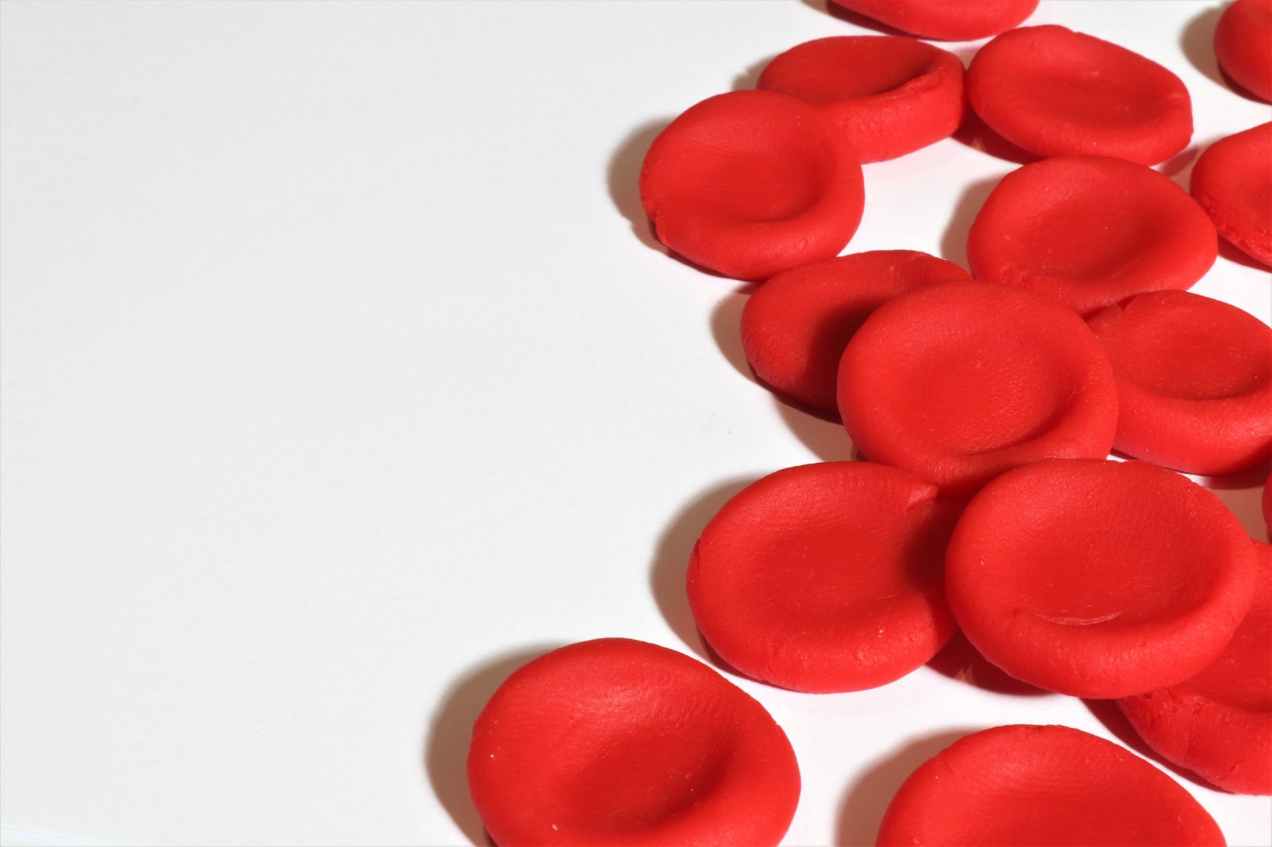
Also, maybe the proteins on your red blood cells which make the difference between blood types really DO make more difference than I realized. D’Adamo argues that the blood types evolved for a reason, other than to make blood transfusions more complicated. 😉 Primarily, he states that the reason we have defenses against other blood types is because those proteins are similar to viruses and bacteria that we needed to fight against. So basically it’s just a coincidence that it’s messing up blood transfusions.

If you follow that reasoning, it makes sense why your blood type would have broader implications, both on your immunity and on your food intolerances.

Because Type O has defenses against both Type A and Type B (and therefore anything else that is molecularly similar to those blood types), people who are Type O are at greater risk for autoimmune problems, according to D’Adamo (which again makes a certain amount of sense). I am Type O and was recently diagnosed with an autoimmune condition and because of that I am currently eating paleo (since before I read this book). So it was interesting to me that a paleo eating plan is recommended for me based on my blood type. (Although in the book, he classifies my health problem NOT as autoimmune but as something else and states that it’s more common for a different blood type, so there’s that. 😉 )

Even though he encourages meat consumption, I liked that he didn’t say you could just have all the fat you wanted, of whatever type, the way some people do on different diets like Keto or Atkins. He recommends high-quality, lean meat for meat eaters.

This is a random thought I liked, and I don’t know how true it is, but it makes sense to me (mainly because I don’t think “large amounts of starches, such as breads and potatoes” are good for you in the first place): “Perhaps the only real food-combining rule is to avoid eating animal proteins, such as meats, with large amounts of starches, such as breads and potatoes. This is important because animal products are digested in the stomach in a high-acid environment, while starches are digested in the intestines in a high-alkaline environment. When these foods are combined, the body alternately nibbles at the protein, then the starch, then back to the protein, then back to the starch; not a very efficient method. By keeping these food groups separated, the stomach can concentrate its full functions on the job at hand. Substitute low-starch, high-fiber vegetable side dishes, such as greens. Protein-starch avoidance doesn’t apply to tofu and other vegetable proteins, which are essentially predigested.” (page 366)

Basically, I don’t see how this diet can really hurt you (other than a possible waste of time learning it) and maybe it will help you. 🙂 You’d have to see for yourself.

Standard
Uncategorized

Healthy Recipes I Really Like

In no particular order, here is a random assortment of healthy recipes that I like (and bonus, all of these are easy recipes too!):

Overnight Oats: This particular recipe is good, although I think I prefer without the lemon. One great thing about this idea is that once you’ve got the basics down, you can really vary it with different fruits, different spices/flavours, etc.

Slow Cooker Coconut Curry Lentils: This is so easy and good. 🙂 I make this pretty often, plus I freeze several servings and it’s one of my favorite things to take to work for lunch.

Crock-Pot Vegetarian Chili: This is just a super easy super basic chili recipe, and when I make it it’s pretty boring because I leave out the extra seasonings and just depend on the onions and what’s in the canned chili beans. (But I’m actually thinking I might have made it TOO boring now. 😉 ) I have a very low tolerance for hot/spicy foods, which is why I started making my own chili. Also, in my quest to decrease my consumption of animal products, I find that it’s easier to use less sour cream in my chili if it’s milder. 🙂

Zucchini Noodles (AKA Zoodles): Although this isn’t really a “recipe”, their 3rd method is the best/easiest way to cook these. You just put your sauce and your zoodles all in the same pan and cook them together.
Bonus: you only get one pan dirty. 🙂 I’m a big fan of using zoodles, because it’s an easy way to swap some carbs for an extra serving of veggies.

What are YOUR favorite recipes?

Standard
Uncategorized

Body Hygge

Hygge (pronounced hue-guh). It’s a word that’s been popular lately. It’s defined as “a quality of coziness and comfortable conviviality that engenders a feeling of contentment or well-being (regarded as a defining characteristic of Danish culture).”

Hygge is usually used to refer to soft blankets, flowers, candlelight, etc. But what if we applied it to how we view our bodies?

In How to Hygge: The Nordic Secrets to a Happy Life, author Signe Johansen postulates that maybe people worry less about what their body looks like in a culture where strength is important to get you through a hard winter, and where there’s a lot less of the year for parading around in skimpy clothing.

That really got me thinking. I wish I could say that I no longer care what my body looks like, but that would be a lie. 😉 BUT, through my journey of discovering my love for exercise, I’ve realized a few things:

#1 It’s much easier to gain strength than to lose fat. Assuming of course that you are the average, sedentary individual, and you don’t have a specific disease/disability preventing you, you can workout and not worry too much about what you eat, and you WILL gain muscle/strength. Aerobic exercise in particular is still helping your heart, whether you’re losing weight or not. If you are working out, you *will* be stronger AND healthier, whether or not you look any different on the outside.

#2 Working out makes you feel AMAZING. I know, I know, you’ve tried it and that’s not how it made you feel. 😉 It can take a few tries sometimes. Find something you enjoy. But the endorphin rush is real. Besides, working out boosts your self-esteem. I used to think it was just me. I noticed that when I worked out, I felt better about myself. Kind of like “I may be overweight, but I workout“. 😉 BUT, it’s been studied, and it turns out I wasn’t the only one!! Plus, aerobic exercise has proven benefits in regards to anxiety and depression.

#3 It helps to have different goals. For instance, when I was training for my half marathon, I was also (irregularly) working on strengthening my core. When I finished my half marathon and spent more time on overall body strengthening, I started to notice that my core was (finally) getting stronger. Things like core strength can improve really slowly, but I had been so focused on my running that I was able to work on my core without overthinking it and getting discouraged. I have several goals that I work on at the same time, and when it seems like I’m not making any progress on one, I’ll often find that I’m finally making progress on another.

The bottom line is, eat and move to *be healthy* and to *feel good*, and stop worrying about what you look like for swimsuit season. 😉

Have some goals you need help with? Or need help even knowing where to start? Maybe I can help! 🙂

Standard
Uncategorized

Routines I’ve Tried for Getting That First Pull-Up (Still Waiting, but Making Progress)

So, as I’ve said before, I still am not able to do my first pull-up.

But I have learned some things along the way.

Ever since I was a kid, I’ve wanted to be able to do a pull-up (or a chin-up, I’d be happy with either, but I’m starting with pull-ups). Several years ago my husband bought one of those pull-up bars that fits in a doorway. He was using it a lot, but I got discouraged because I couldn’t do one and didn’t know how to start trying.

Assisted Pull-ups with a Chair:

Then a friend shared a trick with me. She told me to put a chair under the pull up bar, and use my legs as much (or as little) as I needed.

I was excited to try it, since when you do that you get through the whole range of motion. I started with 10 reps (1 rep being a pull up and letting yourself back down. I tried to go down slowly so that I was working my arms in both directions.) I was doing that about every other day.

Negative Pull-ups:

Similar to my friend’s idea with the chair, except you just climb up to the pull-up bar and then lower yourself down as slowly as possible. Although this is a great method, if you’re just starting out (like I was) I recommend keeping a foot on the chair (or using resistance bands) so that you’re not just free-falling. 😉

I think negatives work the best for me. I saw a video online that mentioned that doing negatives really just makes you better at negatives, which makes sense, but I *am* able to pull myself up farther, even though my progress might be slow.

Assisted Pull-ups with Resistance Bands:

So, I got super excited about this because it seemed so cool to be able to actually pull myself up, even if it was with help. But then *after* purchasing them, I did some *more* reading, and resistance bands have disadvantages because the “help” isn’t even (more help when the band is stretched more at the bottom, less help as you get up towards the pull-up bar), plus there can be momentum from the band kind of snapping back into its unstretched position.

But, I went ahead and tried them. But honestly, I don’t think I gained much/any strength using them. I think negatives work better for me. But I also think I might go back to them sometimes, because using them would be better than not doing anything, and it gets discouraging when I’m not seeing improvement.

Other Exercises:

I haven’t actually tried this, mostly because I like to keep things simple. But there’s a lot of info out there on the web if you want to try exercises like ring rows to build up the muscles you need for pull-ups.

My Routine:

This has evolved as I’ve continued to read and try things, but basically this is what I did/do with most of the methods I discussed, unless stated otherwise:

Do as many reps as I can
Break for 2 minutes
Repeat until I can’t do any more
The whole process takes less than 10 minutes (although I guess it could take longer if you’re stronger)

I currently use negatives, and so where I used to several pull-ups if I was using the resistance band, now I only do 1 negative before resting for 2 minutes. But that’s if I do a REALLY good negative. REALLY slow. If I don’t try as hard I could do more. So it’s something you have to figure out for yourself.

However, I found that I wasn’t making progress any more with that, so I decided to do that 2-3x/day (which is hard if you’re at work all day and don’t have access to a pull-up bar). Then I still wasn’t making progress, so I decided to do it 3-5x/day, but that hasn’t been working, because of logistical reasons (like being away from my bar) and just flat not wanting to do that. 😉 So . . . I’m still figuring it out.

What’s your favorite method? Do you have any tips? Do you want to join me on this journey? Let’s chat in the comments! 🙂

Standard
Uncategorized

Fitness Gains

Last week I told you about my recent experiences with HIIT. Also last week, I shaved almost 3 minutes off my time for 5K! I don’t know that it was entirely an improvement in fitness, I think it was partially better pacing, but it still felt GREAT!

Something I haven’t mentioned here yet is my goal to do a pull-up (hopefully more than 1 eventually). It’s can be difficult for me to know how to track progress, because I’ve been working on this goal for a long time and I still can’t do my first pull-up. BUT, I can definitely lower myself a LOT slower on my negatives, and I can pull myself up part way.

Have you gotten your first pull-up yet? Or are you still trying? What are your tips? Tell me in the comments! 🙂

Standard