Food, Health/Fitness

Giving Up Sugar

So, for reasons that are too involved to go into right now (probably a future blog post), I’m on a new . . . diet? I hate to use that word because it sounds like I’m trying to lose weight, and that’s not what it’s for. Healthy eating plan? 😉

Anyway, I’m not supposed to have any added sugar (with the exceptions of occasional maple syrup, honey, that sort of thing). I was a sugar addict. Even after committing to this diet over the weekend, I would allow myself a little bite of something every day, whether it was a chocolate bar, chocolate milk, or ice cream. It was still WAY less than I usually had, but I was afraid I would have a lot of trouble getting off sugar since I wasn’t really *off* of it. 😉

But yesterday I was pretty tired by the end of the day. I haven’t been sleeping well so that was part of it, but also I hadn’t packed enough food for my day at work. Anyway, I had a good dinner, and was planning to be lazy the rest of the night.

BUT, then I got a second wind. Oh, I think I was also a bit dehydrated, so I had some water. I was planning to let myself cheat again, because I felt like I was really craving and “needing” sugar, but then I realized I didn’t really need it or even want it that badly!

I did some negative pull-ups on the bar, folded a bunch of clothes, and was just generally bouncing around!

Today I’m not feeling quite as bouncy 😉 (busy day at work) but I’m noticing again that I’m not feeling that strong urge to reach for the sugar. It’s more like just a habit now. After a busy day at work like that, I feel like I “deserve” a bowl of ice cream or something, but I don’t really want it now. (I’m sure it won’t *always* be this easy, but it’s nice that it is sometimes.)

All of which is to say, I wish I’d done this sooner. 🙂

What do you think? Let me know in the comments!

And if you haven’t read New Science on Weight-Loss, you should check it out! 🙂
Standard
Food, Goal Setting, goals, Health/Fitness

New Science on Weight-Loss

“We don’t use the same surgical techniques we used forty years ago. We don’t use the same computers we used forty years ago. And there’s no need to use the same nutritional and exercise approaches we used forty years ago.”

The Calorie Myth by Jonathan Bailor

I recently read 2 books that showed me fresh perspectives on how we gain and lose weight.

Both books had pros and cons, but basically agreed on their major points.

My key takeaway:

The *quality* of what you’re eating is vastly more important than the *quantity* of what you’re eating. We *especially* need to reduce our intake of refined carbs.

In a way, I already knew that and was acting on it. Many of us are familiar with phrases such as “empty calories”. We know that if we’re told to eat a certain number of calories per day, that doesn’t mean to just drink that many calories of soda, for instance. A basic understanding of nutrition tells you that you need to be eating food with a balance of nutrients.

However, both of these books show how certain assumptions have misled the public, and continue to do so.

When I first read Why We Get Fat: And What to Do About It by Gary Taubes, I was pretty mad at it. I feel that the book/author doesn’t put enough emphasis on the positive benefits of exercise, and puts too much emphasis on a diet heavy in meat.

Then I read The Calorie Myth: How to Eat More, Exercise Less, Lose Weight, and Live Better by Jonathan Bailor. This book addresses a lot of the same issues, but also addresses exercise more fully, AND has suggestions for how to eat according to the author’s guidelines even while being vegetarian or vegan.

So you can guess which book I liked better. 😉

But after I had calmed down a bit, I respected Why We Get Fat more. The Calorie Myth was not as footnoted as I would have liked. I used Google to try to find some of the research on my own, and from a cursory examination, it seems that Bailor was right, although maybe exaggerating a few things. (Primarily he makes some pretty big claims about how eating a certain amount of protein in a single meal can help you build more muscle, but when I looked that up it seemed that the jury was still out.)

On the other hand, I felt that Gary Taubes had done a great job backing up his claims with science, even though I felt that he was sometimes a bit selective with gathering his information (specifically that he touted the benefits of a meat based diet without really presenting evidence on other options).

So, I don’t have a strong recommendation between them. I think The Calorie Myth gives you more flexibility with your diet, and also has some interesting ideas about exercise. But if you’re a person who really needs the science proven to them, probably Why We Get Fat is a better choice for you. Or you could do like I did and read both of them. 😉 But I think you’ll end up convinced to make a lot of the same changes no matter which one you read.

But if I could only recommend one book on weight loss, it would be a book that’s *not* focused on weight loss. 🙂 Health at Every Size: The Surprising Truth About Your Weight by Linda Bacon.

If you’re looking for information about health more generally, not weight, my favorite is Anticancer Living: Transform Your Life and Health with the Mix of Six by Lorenzo Cohen (it’s not just about cancer).

And if you’re still interested, 😉 jump on over to this post where I get into more detail about the exercise plan from The Calorie Myth.

Standard
Health/Fitness

A Time-Efficient Workout! (But is it effective?)

In The Calorie Myth: How to Eat More and Exercise Less, Lose Weight, and Live Better by Jonathan Bailor, the author recommends a very time efficient workout plan.

I’ll let you look into the details yourself, but basically you do only 4 exercises of 10 reps each to hit your major muscle groups, only 1-2x/week in combination with leading an active lifestyle of walking, biking, etc.

When I first saw that the author was recommending only a very short workout once to twice a week, I was suspicious. However, since he includes the caveat about also doing plenty of walking, biking, etc (which he doesn’t consider “exercise”), I was open to considering only “working out” a couple times per week.

I was still suspicious that I would see any results though. For one thing, one of the exercises is negative pull-ups, and for those of you who have been following my blog, you know I’ve been doing those for a while. So I didn’t think that 10 of them 2x/week would do anything.

However, after the first time doing the plan he recommends, I was surprised how sore my muscles were afterwards! I think it might have to do with just doing all 10 reps right after each other with no breaks in between. And my legs were also sore from the squats included in the program. So I was impressed!

But since then the results haven’t been so dramatic. I might not be pushing myself as hard as the author says you need to, I don’t know.

For now, I think it’s basically a good plan, but with the modification of doing it 3-4x/week like I normally would. It’s still time-efficient that way, and since it hits a bunch of different muscles, I don’t worry if I just walk or something the rest of the time. Actually, I’ve been into jump-roping lately. 🙂

What’s your favorite workout?

Standard
Health/Fitness

Fitness Trackers

As most people who know me know, I’m *super* into my Fitbit. 😉 And if I meet someone and see that they are wearing a Fitbit too, I’ll often ask them to be “friends” with me on the app.

If you’re considering buying a fitness tracker of any kind, this article by ConsumersAdvocate.org, is amazingly thorough. There are trackers on there I hadn’t even heard of, and that was really surprising to me! Plus, they review the devices on a bunch of different areas of strengths & weaknesses.

I did notice that Fitbit was rated as “Best for Motivation” 😉 but you might find another device that is better in particular aspects that are more important to you. 🙂

In the interest of full transparency, I want my readers to know that I was approached by someone at ConsumersAdvocate.org and I agreed to mention their article in return for them promoting my blog. HOWEVER, I visited their website before agreeing, and I liked it. For one thing, they are upfront about how they make their money. For another, I really think their article could help someone who’s trying to decide which fitness tracker to buy. 🙂

Lastly, as I mentioned already, the article is very thorough and covers a lot of good points. But I’ll add one of my own that I didn’t see mentioned:

I’m partial to Fitbit, but when you are considering which fitness tracker to buy, I suggest that you consider who you want to be “friends” with and what they have. A lot of my friends/coworkers have Fitbit, so if I switched to something else, it would be more difficult for me to be in games/competitions with them. There are apps that enable people with different types of devices to join up, but it’s less convenient. (Two that I’ve personally used are Stridekick and Inkin.)

What fitness tracker do you prefer, and why? Let me know in the comments!

And for a great article about your different options, head over to ConsumersAdvocate.org!

If you liked this post, check out my reviews of some at home workout options

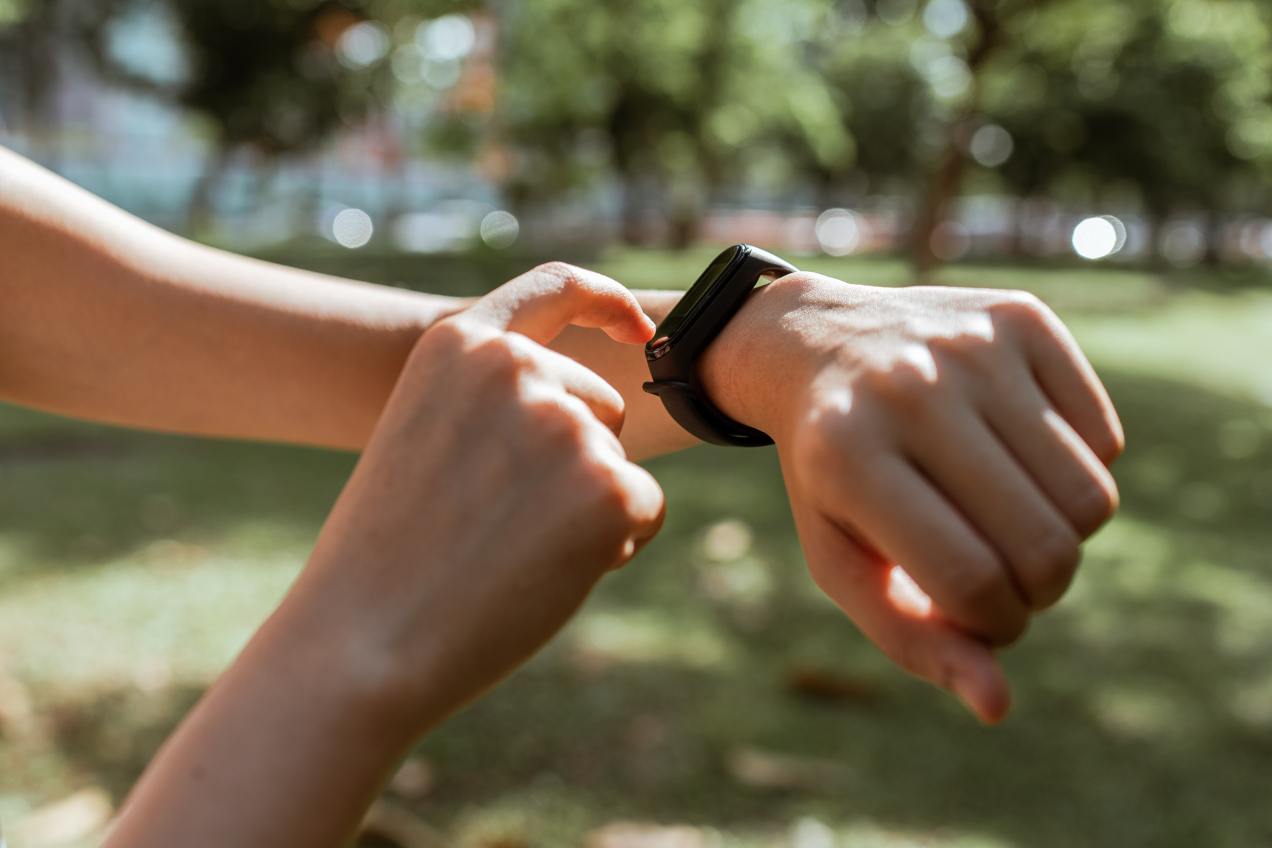
[Photo by Ketut Subiyanto from Pexels]

Standard
Goal Setting, goals, Health/Fitness, pull-ups

A New Pull-Up Strategy

I recently found this video and it’s my new favorite strategy for pull-ups. It’s not *that* different from what I’ve been doing, but it adds some small (very minimal range of motion) pull-ups along with the negatives. I fast forwarded through the first part of the video, but then I did double check that I could do the previous stages.

I’m on Step 5, but I’m kind of mixing Step 6 into it when I can. 🙂

I also just signed up for an 8 week (virtual) workout that’s supposed to help me with pull-ups, so I finally had to fashion some rings for myself off my pull-up bar to do ring rows (I’ve really resisted needing any more equipment).

That’s actually something I really like about that video, is that you don’t need anything except your pull-up bar and something to step up with so you can do negatives.

Standard
Goal Setting, goals, Health/Fitness

#quarantinegoals

Here where I live (in WA state) we thought this quarantine was coming to an end, but now it’s dragging on. I don’t know about you, but I think it’s a good time for a constructive diversion.

I’ve had quarantine goals since the beginning, because I figured if I was going to be stuck in my house and off work, I might as well use the time productively.

So, if you’re still under quarantine, how can you make use of your time?

Some examples from my own life:

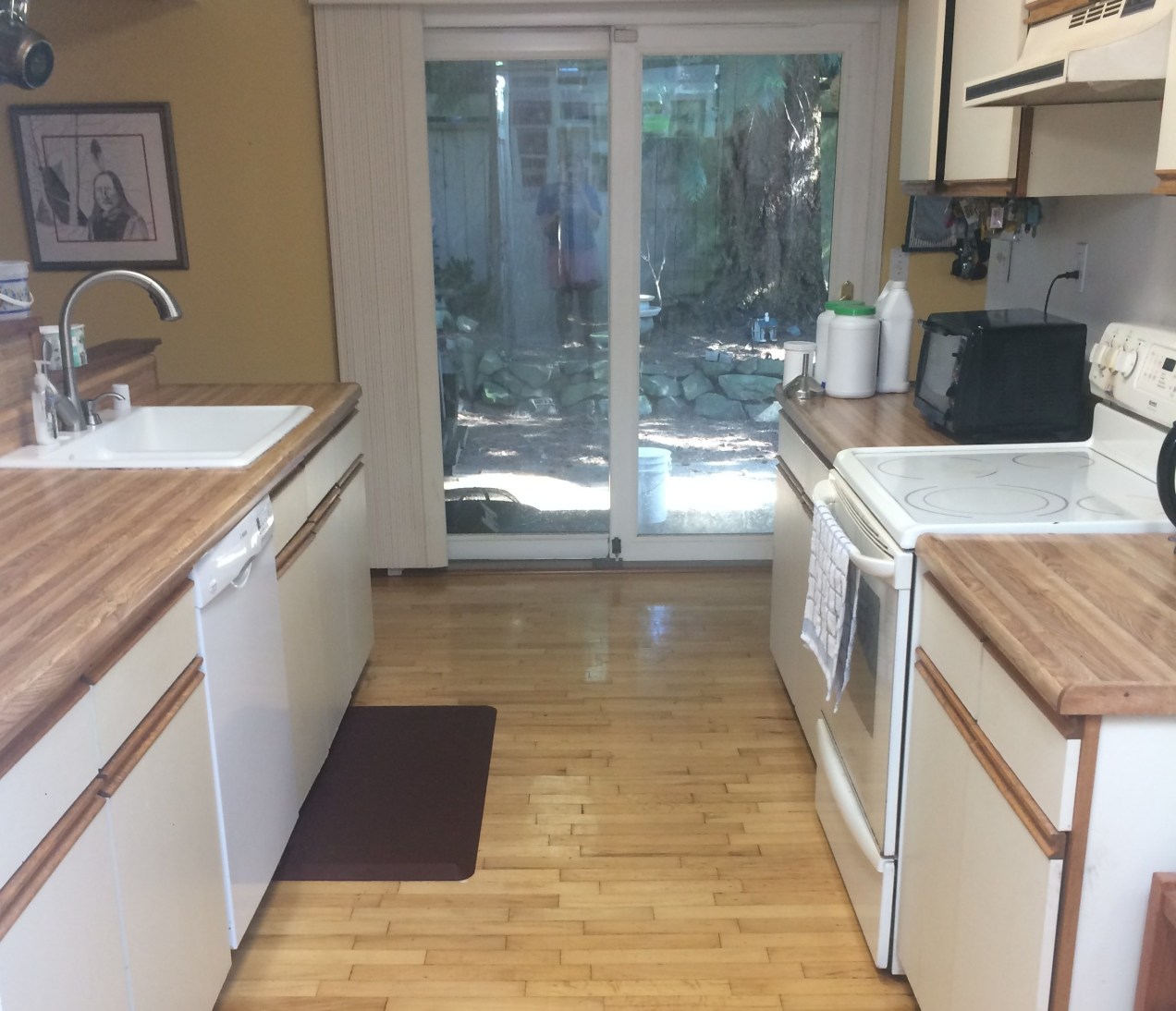
Get/keep the kitchen clean (see photo 😉 But no, it doesn’t look like that *all* the time)
Catch up on some paperwork I’ve been shoving in my desk
Exercise/move more (a friend had the great idea to be accountable to each other for this, and that has really helped)
Make more healthy food (that’s been an off & on one for me. I get tired of cooking)
Reading (especially magazines that I’m trying to catch up on)

What are YOUR quarantine goals? Let me know in the comments!

For more from me, check out My Thoughts on New Year’s Resolutions and Is It Time to Freshen Up Your Goals?

Standard
goals, Health/Fitness

The Pull-Up Saga Continues! (Includes advice!)

(First off, no, that’s not a photo of me. Photo by mentatdgt from Pexels.)

So, some people are probably tired of hearing about my continual inability to do even one pull-up. Trust me, I’m more tired of talking about it. 😉

But I think I’ve finally hit upon the formula that works (at least for me) so I wanted to share it.

Short version, do more sets.

Really, I should have realized this sooner, because the basic formula for weight lifting is:

Training Volume = Sets x Reps x Weight

Now, I am aware that there is plenty of debate about the best ways to play with those numbers. But I’m just sharing my experience and what works best for me. 🙂

First of all, I can’t do much weight, so there’s not a lot of wiggle room there. 😉 So that leaves sets/reps.

And actually, even as I’ve gotten stronger and been able to pull more weight, it works better for me to do less weight (to a point) more times.
(This article by Nerd Fitness is my favourite article about getting that first pull-up, and I’ve read a *bunch*. They recommend doing 3 sets/day, 3 times/week. That’s where I started, but I’ve found that I make faster progress doing more sets/day, especially when I’m not able to do very many reps (sometimes I progressed faster than I really should have). The main problem with this method is most of us have to go to work, and we probably don’t have the opportunity to do these exercises several times during our work day. On days when you’re home (or maybe you work from home!) it’s relatively easy to just do a few extra sets (assuming you have a pull-up bar), since each set only takes a couple of minutes. (If you don’t have a pull-up bar at home, I recommend getting one! My husband & I got one from Amazon several years ago and I think it was less than $30. This one, but unfortunately it’s not currently available.))

I’ve been following the guidelines in that article, but also making it my own to a certain extent. I’ve been doing a mix (off-and-on) of assisted pull-ups (with resistance bands) and negatives. (See this post for more info.)

My two main takeaways from that article by Nerd Fitness have been:
1. keep doing your current routine until you can do 5-8 reps/set
2. negatives should NOT be “all out”. Holding them for 3 seconds is good. (As I was getting stronger, my negatives were getting slower and slower, but I was never able to do *more* of them in a set. This seems REALLY obvious now, but I didn’t realize it until I reread that article.)

I have reread (or at least skimmed through) that article *several* times through this adventure, and I frequently notice things that I hadn’t picked up before.

It’s also great to mix things up. When you stop seeing progress, switch from assisted pull-ups to negatives, or vice versa.

Okay, that’s all the advice I have for now! I hope you are seeing progress towards whatever fitness goals you’re currently working towards. And again, if you’d like some extra support, please contact me!

Standard
Goal Setting, Health/Fitness

Training

I post this, not to say how great I am, but as encouragement to all of you. I think sometimes we focus too much on the end goal, and not enough on the process that got us there.

I have completed 2 half-marathons. I have also trained for 2 half-marathons.

Which one of those sentences is more impressive? Running/walking 13.1 miles on the day of the race, or all the miles that led up to that?

Obviously, for a long time I focused on the races. My goal for my second one was to cut my time by about half an hour (wanted to be under 3 hours). I ended up cutting it by 25 minutes which I decided was close enough. 😉

Then I asked myself if I was actually in better shape for the second one, or did I just pace better, push myself harder, . . . the questions go on.

(And yes, to anyone who knows anything about racing, I know that people run *marathons* in less time than it took me for a half. I know it’s not an impressive time. But I finished. TWICE.)

Now I’ve realized that although of course it’s nice to have a medal and a brag-worthy finishing time, it says a lot about me that I put in all those training miles over the months beforehand.

I stuck with it, and that’s something to be proud of.

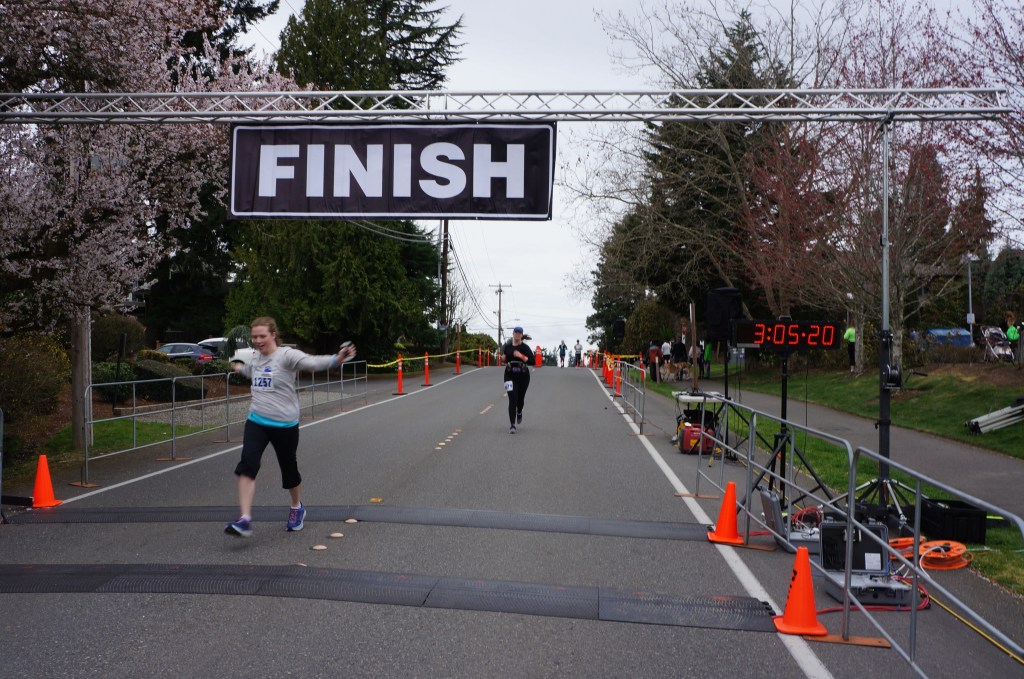
2018 ~ I know I’m not *quite* over the finish line here, but it shows my time.
2019~ I had read an article about great finish line photos, so I was trying for an awesome jump over the finish line. I think the camera missed it. 😛
Standard
Health/Fitness

Healthy Holiday Hosting

I know I’m late posting for *this* holiday season (2019), although some of you might still have parties planned. BUT, these tips apply year ’round to other types of parties also.

So, as the title suggests, this post won’t necessarily help you as a party *guest*, but as a host you can help your guests out by promoting a healthier atmosphere at your own parties, and hopefully start some new trends. (Also, so many articles have been written for party *guests*, but I haven’t seen much advice to *hosts* on how to make parties healthier.)

pssst . . . Maybe you should send this post to your friends who love to host. 😉

Let’s just get something obvious out of the way: offer healthy appetizers. These can be *in addition* to your other appetizers. I’m not trying to take the fun and the great food out of your celebrations! Have your brownies, cookies, candy or whatever other food you love to serve, but please also have some fruits, veggies, etc for people who would like something healthier.

I know someone who is a FANTASTIC hostess and has some GREAT parties, and she will usually have a large platter with cheese, crackers, and fruit, and it’s delicious and healthy and beautiful and is great to snack on.

But here’s an idea that’s a little unusual. If your party involves a meal, don’t just offer appetizers beforehand, offer the first course. I have been at too many parties where I eat too many appetizers because I’m hungry (oh, and here’s one tip for guests: don’t come hungry. Eat a light, healthy meal before you come, so you’re not hungry. Then you can slow down and enjoy a smaller amount of whatever holiday foods you desire) and then when it’s time to eat the main meal, I’m not really hungry anymore. I don’t mind as much if the appetizers were my favourite part, but sometimes I don’t even like the appetizers *that* much but I eat too many of them because I get so hungry because dinner is delayed.

Has that happened to you? Or is it just me? You were smart and ate something before you came. But they told you dinner was being served at a certain time, but now it’s not ready, and so you’re all waiting . . . and waiting.

Which brings me back to my main point: if you have something that can be served earlier, like a salad, please go ahead and serve that. Maybe just set it out with the appetizers. If people want to wait and have their salad with the rest of the meal, they can (assuming there’s any left 😉 ) but if people are ready for “real” food instead of appetizers, they can start on the salad.

Think of it this way: if you were a party guest that was trying to eat healthier, what would you like to see at a party? And then do that. 🙂

Do you have any other great tips? Let me know in the comments!

Standard
Health/Fitness

Some Thoughts on Calorie Counting

Calorie counting can be easy, maybe even fun, and can allow you to eat the foods you love (yes, really!) and still lose weight.

This is not something I do all the time, but maybe once or twice a year for a few days to a week when I need a check-up.

I use the Fitbit app, primarily because I have a Fitbit tracker and the Fitbit Aria 2 Scale so then everything is in one app, but I also think it is easy to use.

When you keep track of your calories, you make some surprising discoveries. The first time I calorie counted (for a nutrition class in college) I discovered just how many calories are in a Costco muffin. If you have an app that also tracks exercise (like with Fitbit and many others) you might also be surprised to see how *few* calories you burn from your workout, especially compared to the amount of calories in something you’re contemplating eating. 😉

It may sound restrictive, but it’s so much easier these days will all the apps that are out there (even if you don’t have a Fitbit tracker, you can still use the app to track your calories if you want), and I find that tracking my calories in/out allows me to eat whatever I want (in moderation) and still lose weight. Filling up on fruits and/or veggies is a great way to quiet hunger without adding too many calories. And then I can have ice cream, chocolate, or any other fun food that I want! As long as I have a small enough portion. 🙂

Don’t get hung up on perfectionism. 😉 If I’m eating something out of a package, it’s SO easy to track it in an app. You can just scan the barcode, double check the info (especially the serving size) and save it. But what if I actually *made* the food, and my recipe doesn’t have nutrition info? A tip I learned from a friend was, just guesstimate it. 🙂 The apps have databases built in, and if you made spaghetti sauce, for instance, just pick an option that’s already there, rather than trying to make a custom option. [Although, I have done that if I have the time and it’s something that I think I’ll be eating a lot. For instance, one time I made my salad like I normally would, except I measured everything. Then, when I made a salad again, I could just use the info that I saved from the time I measured.]

Although calorie counting can be a lot of work, when I’m consistent about it, I feel good, I don’t feel deprived (again, I eat what I want, just in moderation) and I lose weight healthfully.

Standard