Food, Goal Setting, goals, Health/Fitness

New Science on Weight-Loss

“We don’t use the same surgical techniques we used forty years ago. We don’t use the same computers we used forty years ago. And there’s no need to use the same nutritional and exercise approaches we used forty years ago.”

The Calorie Myth by Jonathan Bailor

I recently read 2 books that showed me fresh perspectives on how we gain and lose weight.

Both books had pros and cons, but basically agreed on their major points.

My key takeaway:

The *quality* of what you’re eating is vastly more important than the *quantity* of what you’re eating. We *especially* need to reduce our intake of refined carbs.

In a way, I already knew that and was acting on it. Many of us are familiar with phrases such as “empty calories”. We know that if we’re told to eat a certain number of calories per day, that doesn’t mean to just drink that many calories of soda, for instance. A basic understanding of nutrition tells you that you need to be eating food with a balance of nutrients.

However, both of these books show how certain assumptions have misled the public, and continue to do so.

When I first read Why We Get Fat: And What to Do About It by Gary Taubes, I was pretty mad at it. I feel that the book/author doesn’t put enough emphasis on the positive benefits of exercise, and puts too much emphasis on a diet heavy in meat.

Then I read The Calorie Myth: How to Eat More, Exercise Less, Lose Weight, and Live Better by Jonathan Bailor. This book addresses a lot of the same issues, but also addresses exercise more fully, AND has suggestions for how to eat according to the author’s guidelines even while being vegetarian or vegan.

So you can guess which book I liked better. 😉

But after I had calmed down a bit, I respected Why We Get Fat more. The Calorie Myth was not as footnoted as I would have liked. I used Google to try to find some of the research on my own, and from a cursory examination, it seems that Bailor was right, although maybe exaggerating a few things. (Primarily he makes some pretty big claims about how eating a certain amount of protein in a single meal can help you build more muscle, but when I looked that up it seemed that the jury was still out.)

On the other hand, I felt that Gary Taubes had done a great job backing up his claims with science, even though I felt that he was sometimes a bit selective with gathering his information (specifically that he touted the benefits of a meat based diet without really presenting evidence on other options).

So, I don’t have a strong recommendation between them. I think The Calorie Myth gives you more flexibility with your diet, and also has some interesting ideas about exercise. But if you’re a person who really needs the science proven to them, probably Why We Get Fat is a better choice for you. Or you could do like I did and read both of them. 😉 But I think you’ll end up convinced to make a lot of the same changes no matter which one you read.

But if I could only recommend one book on weight loss, it would be a book that’s *not* focused on weight loss. 🙂 Health at Every Size: The Surprising Truth About Your Weight by Linda Bacon.

If you’re looking for information about health more generally, not weight, my favorite is Anticancer Living: Transform Your Life and Health with the Mix of Six by Lorenzo Cohen (it’s not just about cancer).

And if you’re still interested, 😉 jump on over to this post where I get into more detail about the exercise plan from The Calorie Myth.

Standard
Goal Setting, goals, Health/Fitness, pull-ups

A New Pull-Up Strategy

I recently found this video and it’s my new favorite strategy for pull-ups. It’s not *that* different from what I’ve been doing, but it adds some small (very minimal range of motion) pull-ups along with the negatives. I fast forwarded through the first part of the video, but then I did double check that I could do the previous stages.

I’m on Step 5, but I’m kind of mixing Step 6 into it when I can. 🙂

I also just signed up for an 8 week (virtual) workout that’s supposed to help me with pull-ups, so I finally had to fashion some rings for myself off my pull-up bar to do ring rows (I’ve really resisted needing any more equipment).

That’s actually something I really like about that video, is that you don’t need anything except your pull-up bar and something to step up with so you can do negatives.

Standard
Goal Setting, goals, Health/Fitness

#quarantinegoals

Here where I live (in WA state) we thought this quarantine was coming to an end, but now it’s dragging on. I don’t know about you, but I think it’s a good time for a constructive diversion.

I’ve had quarantine goals since the beginning, because I figured if I was going to be stuck in my house and off work, I might as well use the time productively.

So, if you’re still under quarantine, how can you make use of your time?

Some examples from my own life:

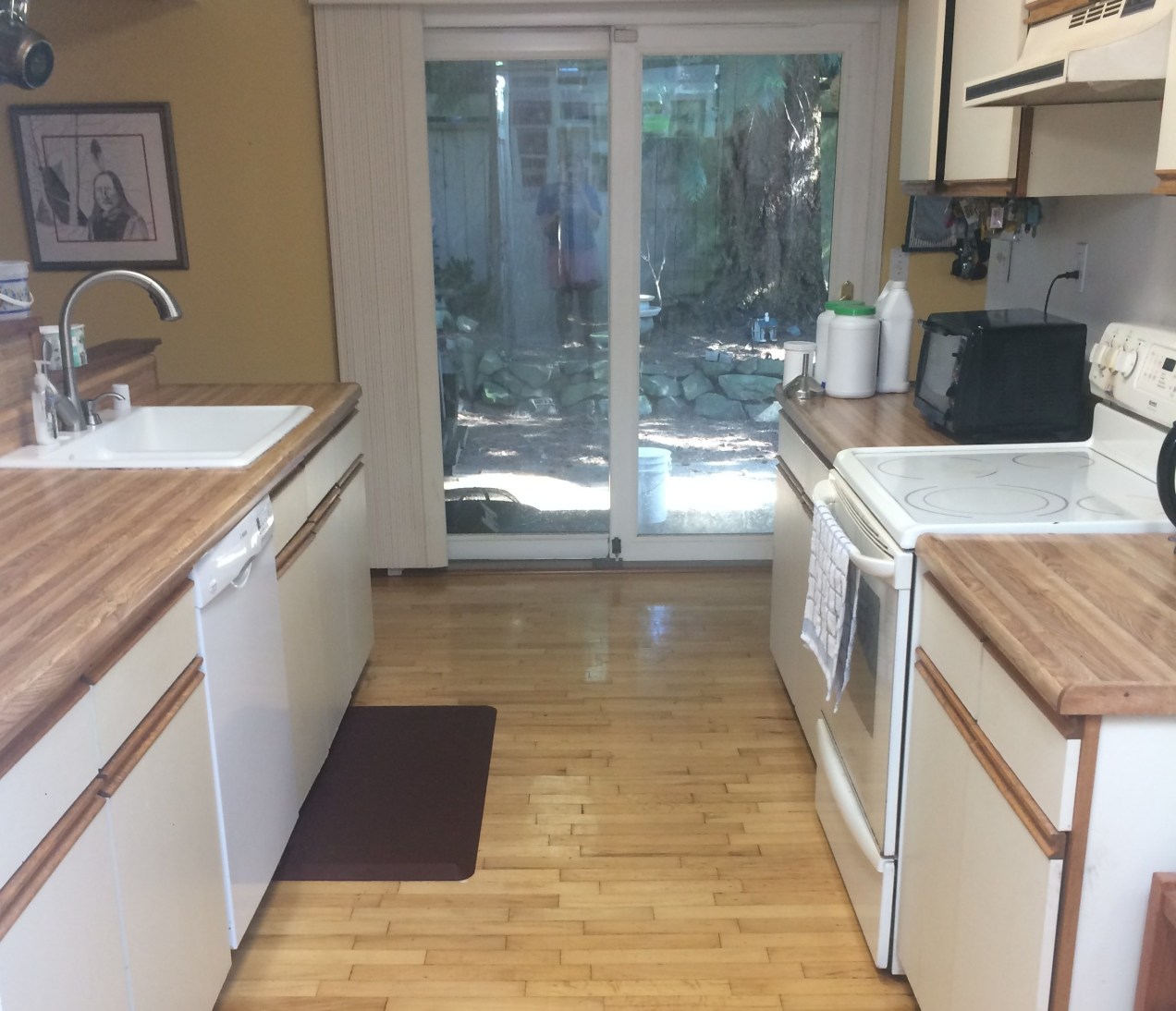
Get/keep the kitchen clean (see photo 😉 But no, it doesn’t look like that *all* the time)
Catch up on some paperwork I’ve been shoving in my desk
Exercise/move more (a friend had the great idea to be accountable to each other for this, and that has really helped)
Make more healthy food (that’s been an off & on one for me. I get tired of cooking)
Reading (especially magazines that I’m trying to catch up on)

What are YOUR quarantine goals? Let me know in the comments!

For more from me, check out My Thoughts on New Year’s Resolutions and Is It Time to Freshen Up Your Goals?

Standard
goals, Health/Fitness

The Pull-Up Saga Continues! (Includes advice!)

(First off, no, that’s not a photo of me. Photo by mentatdgt from Pexels.)

So, some people are probably tired of hearing about my continual inability to do even one pull-up. Trust me, I’m more tired of talking about it. 😉

But I think I’ve finally hit upon the formula that works (at least for me) so I wanted to share it.

Short version, do more sets.

Really, I should have realized this sooner, because the basic formula for weight lifting is:

Training Volume = Sets x Reps x Weight

Now, I am aware that there is plenty of debate about the best ways to play with those numbers. But I’m just sharing my experience and what works best for me. 🙂

First of all, I can’t do much weight, so there’s not a lot of wiggle room there. 😉 So that leaves sets/reps.

And actually, even as I’ve gotten stronger and been able to pull more weight, it works better for me to do less weight (to a point) more times.
(This article by Nerd Fitness is my favourite article about getting that first pull-up, and I’ve read a *bunch*. They recommend doing 3 sets/day, 3 times/week. That’s where I started, but I’ve found that I make faster progress doing more sets/day, especially when I’m not able to do very many reps (sometimes I progressed faster than I really should have). The main problem with this method is most of us have to go to work, and we probably don’t have the opportunity to do these exercises several times during our work day. On days when you’re home (or maybe you work from home!) it’s relatively easy to just do a few extra sets (assuming you have a pull-up bar), since each set only takes a couple of minutes. (If you don’t have a pull-up bar at home, I recommend getting one! My husband & I got one from Amazon several years ago and I think it was less than $30. This one, but unfortunately it’s not currently available.))

I’ve been following the guidelines in that article, but also making it my own to a certain extent. I’ve been doing a mix (off-and-on) of assisted pull-ups (with resistance bands) and negatives. (See this post for more info.)

My two main takeaways from that article by Nerd Fitness have been:
1. keep doing your current routine until you can do 5-8 reps/set
2. negatives should NOT be “all out”. Holding them for 3 seconds is good. (As I was getting stronger, my negatives were getting slower and slower, but I was never able to do *more* of them in a set. This seems REALLY obvious now, but I didn’t realize it until I reread that article.)

I have reread (or at least skimmed through) that article *several* times through this adventure, and I frequently notice things that I hadn’t picked up before.

It’s also great to mix things up. When you stop seeing progress, switch from assisted pull-ups to negatives, or vice versa.

Okay, that’s all the advice I have for now! I hope you are seeing progress towards whatever fitness goals you’re currently working towards. And again, if you’d like some extra support, please contact me!

Standard