Uncategorized

Paleo Molasses Cookies!

I developed this recipe myself, although I did incorporate two other recipes (The Best Almond Flour Cookies and Molasses Cookies).

In 2020 I was diagnosed with an autoimmune condition and I started eating paleo. I was very strict at first, but after the first year or so I let myself have more treats. But I was disappointed when I would buy “healthy” cookies, and they would *taste* like “healthy” cookies. They just weren’t worth it. I would buy a package and only eat 1 cookie out of it and then try to pawn the rest off on someone else. 😉

So I decided to try making my own! These are the kind of cookies that you just want to eat and eat and eat and eat! I made most of the dough into balls and froze it so I could make small batches more often (but so far I’ve just been eating the frozen dough!).

If I did the math right, I think these are only about *2* grams of sugar per cookie! (But I made them small.)

Ingredients:

  • 1 cup Miyoko’s cultured vegan butter (salted)
  • 3 eggs
  • 1 cup packed light brown sugar
  • 3/4 cup molasses
  • 2 tsp baking soda
  • 5 1/4 cups almond flour
  • 5 1/4 tsps pumpkin pie spice (not exactly the spices you should use for molasses cookies, but it’s what I had. You can experiment with what you like. 🙂 )
  • Dash of salt

Directions:
Preheat oven to 350. Cream together “butter”, eggs, and brown sugar. Add molasses. Mix your dry ingredients together and then mix in to your wet ingredients. Bake for 10 minutes at 350.
Yield: about 13 dozen, small (about 3 inch diameter) cookies

~~~~~~~~~~~~~~~~~~~~~~~~~~~~~~~~~~~~~~~~~~~~~~

If you try these, please let me know in the comments!

And if you’d like a cheerleader who understands your health journey, contact me and let’s talk!

Standard
Uncategorized

“The Curse of Oak Island” TV Show Fitness Game

As we approach the premiere of the 10th Season of “The Curse of Oak Island” (next Tuesday night, November 15th!), I thought I’d share a little game I put together.

If you’ve watched the show, you know there are certain phrases they repeat frequently. 😉 So I thought I’d take advantage of that! (Fair warning, you won’t get much chance to sit down!)

***Obviously be careful and don’t hurt yourself! If you can’t do burpees or squats (for instance) feel free to modify 🙂

  • Anytime they’re recapping – walk in place (including for the show intro)
  • Archaeology Trailer/XRF area – hold plank the whole time they’re in there (you’re allowed breaks to do other actions if they start recapping or saying keywords 😉 )
  • Bobby Dazzler – 5 burpees
  • “Potentially” (as in “potentially important discovery” or “potentially historic find” 😉 ) – 5 pushups
  • Swamp – drink some water
  • Top Pocket Find – 10 squats
  • War Room – Hold Tree Pose the whole time they’re in there (switch sides at some point)

If you try it out, let me know what you think in the comments!

Standard
Uncategorized

UPDATED Holiday Nog Reviews

(I originally tasted and reviewed most of these for the holiday season of 2017 (on a different blog). I didn’t realize it was so long ago, but I don’t think the products have changed. I updated the post though, so anywhere it says “last year” really is last year (2021).)

I really like eggnog. 🙂 I used to drink it from the time it’s first in the stores around October, until it’s no longer in the stores around January. 😉 But now I’m avoiding milk, so regular eggnog is “off the table”. 😉

Make your own ~ Last year for Thanksgiving, I actually made vegan eggnog! I’m not currently vegan so I could have used eggs, but I was concerned about using raw eggs and the recipes with cooked eggs seemed tricky. I found this recipe for vegan nog and it’s really good! Even non vegan family members liked it. 🙂

Califia Farms Holiday Nog ~ Last year, I saw this nog that I’d never tried, so I impulsively grabbed it. It is the best store bought vegan “egg” nog! I bought some again yesterday! It’s admittedly not as creamy as real egg nog (more like 2% milk than cream, if you know what I mean) but it uniquely has the right flavour. 🙂 There’s something sort of tangy about it that really tastes like egg nog. 🙂 (And, this is far less important, but it’s the right colour too.)

So Delicious Coconut Milk Holiday Nog ~ This is pretty good! Thick and rich, and doesn’t really taste like coconut! I like that it has flecks of real spices in it as well. 🙂 Visually it’s not quite the right colour for egg nog, and it’s a bit sweet, but overall, I think this is a good vegan substitute. It has a bit of graininess to it.

Almond Breeze Classic Almondmilk Nog ~ I like this one! 🙂 I will say though, it tastes more like milk and not so much like eggnog. Compared to the So Delicious Coconut Milk Holiday Nog, this has a smoother/better texture, but hardly any flakes of real spices. It’s maybe slightly less sweet, but overall seems less flavourful. Still good, but not great. Definitely tastes good, just not very eggnoggy, like I said. I just went back and had some more of the So Delicious, and I think that one’s better so far, despite the graininess.

Silk Nog Original ~ I expected to like this one the best, because generally the taste and texture of soy is more like “real” milk than almonds and coconut. But it turned out to be my least favourite. Visually, it looks the most like real eggnog, except again, not enough spice flecks, although you could fix that at home. But this one is thinner than the other two, and just has a funny flavour to it. Actually, I think that flavour is just soymilk. ACTUALLY, now I feel stupid and ripped off, because here are the ingredients: “Soymilk (filtered water, soybeans), cane sugar, locust bean gum, sea salt, natural flavor, turmeric and annatto (for color).” Is it just me, or is that basically just soymilk?!? The back of the carton says “ring in the season with notes of nutmeg and cinnamon and the smooth, velvety flavor of Silk Soy Nog”. Where’s the nutmeg and cinnamon?!? 😉 Unless they’re included in the “natural flavor”, but the other “nogs” list spices in the ingredients. Actually, the carton does *not* say that those spices are included, it says to ring the season in with those spices AND Silk Soy Nog, so maybe it’s like a “batteries not included” kind of thing. 😉

Conclusion ~ I would say don’t waste your money on the Silk Soy Nog, unless you want to fix it up with some more flavour, because it really does just taste like soymilk. Except there’s also a weird feeling to it, like it kind of coats my mouth. :/

Between the coconut and almond milk nogs, I do slightly prefer the So Delicious Coconut Milk Holiday Nog, but I think the Almond Breeze Classic Almondmilk Nog is good too, and some of you might even like it better. But Califia Farms wins 🙂

I hope this helps you, and I wish you a very merry holiday season!

Standard
Uncategorized

The Blood Type Diet

At least two people have asked me about the blood type diet, and my reaction was skeptical.

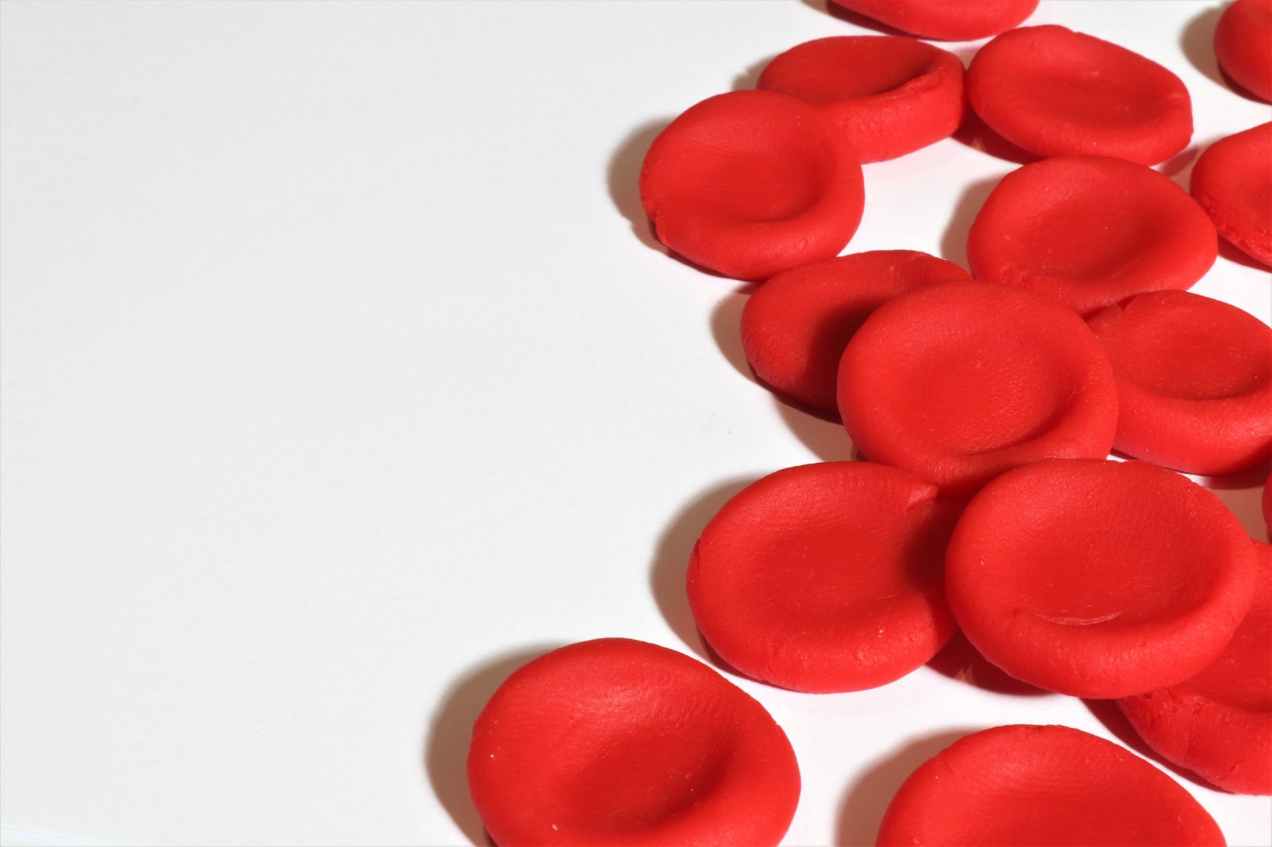
It just didn’t seem that there could be anything about different molecules on the surface of your blood cells that would affect what diet you should be on.

But, I decided to give it a chance. So, I checked out “Eat Right 4 Your Type” by Dr. Peter J. D’Adamo from my local library.

One of the first things I noticed was the summary of the diets on the back of the book. Depending on your type, you are recommended to engage in different kinds of exercise, ranging from “vigorous” to “gentle”, and in the diets that include meat, it says to eat “grass-fed, free-range meat”.

So right away I could see that the book was recommending healthy things, so it didn’t surprise me that some people had great success with this diet. (Once I read it, I found out that the diets are more complicated than the back-of-the-book summary leads one to believe.)

The book also claims that there’s no one-size-fits-all solution: different people do better with different diets. I *absolutely* agree with that (although I do think there are commonalities among healthy diets). Dr. D’Adamo says “If you’ve ever suspected that not everyone should eat the same thing or do the same exercise, you’re right.”

He also says “Although we have seen with our own eyes that certain people respond very well to particular diets while others do not, we have never made a commitment—in science or nutrition—to study the specialized characteristics of populations or individuals that might explain the variety of responses to any given diet.” I have heard that maybe someday there would be a blood test to help us determine that, so it’s intriguing to me that maybe there already is!

I’m going to start with things I did NOT like about the book, but there are some things I liked, so keep reading for those. 🙂

Things I didn’t like:

Some of D’Adamo’s claims seem like a bit of a stretch. He paints a historical picture of how the different types evolved around the world, and although part of it makes sense, part of it doesn’t (at least to me).

Some things he says are contradictory. At first I was giving him the benefit of the doubt that I just wasn’t understanding him, but no, some things are actually contradictory. For instance, the following statements (these are both from the same page (302 in the 2016 edition) Emphasis added): “It has been observed that viral infections in general seem to be more frequent in Type Os because they do not possess any antigens.” “Comparing transmission to bad transfusion reactions, scientists proposed that it is harder for Blood Type O individuals to contract HIV infection from people of other blood types because they carry both anti-A and anti-B antigens in their blood. On the other hand, Type AB, with no opposing blood type antigens, would more easily contract HIV from other blood types.” So at first he states that Type O has no antigens, and then he says that they have antigens to A and B. In other places he says that Type O is generally weak against viral infections, so the first statement about Type O being susceptible to viral infections makes sense, just not the phrase “because they do not possess any antigens”.

Next, I object to his bad advice in one particular circumstance: “Antibiotics are ineffective in the treatment of mononucleosis because it is caused by a virus, not a bacteria. Bed rest while the fever lasts and frequent rest intervals during the one- to three-week recovery period are recommended. Aspirin and adequate fluid intake are encouraged to decrease fever.” In this section D’Adamo is discussing childhood illnesses. Now, I’m no expert on this, but I was told you should never give aspirin to children because of the risk of Reye’s syndrome. So, I looked it up, and according to the Mayo Clinic “Aspirin has been linked with Reye’s syndrome, so use caution when giving aspirin to children or teenagers for fever or pain”.

Lastly, D’Adamo provides menus for the different types. However, he provides this disclaimer: “Occasionally you will see an ingredient in a recipe that appears on your avoid list. If it is a very small ingredient (such as a dash of pepper), you may be able to tolerate it, depending on your condition and whether you are strictly adhering to the diet.”

I understand that every diet needs some flexibility, and several times I have tried (with varying levels of success) to adapt different recipes to different diets. But since these are recipes that are specifically designed for the specific blood types, WHY would they have ingredients that those people are supposed to avoid?!?

Also, the meal plans included alternatives for if you want lighter food or weight loss. But I was disappointed again, because many of the alternatives were your typical diet foods, like rice cakes. Especially for Type O, that disappointed me, because rice cakes don’t seem to fit the paleo model. Also, some of the substitutions reduced fat, but also protein and nutrients, like swapping out almond butter on your toast for jam (although it was specified that it should be a low-sugar variety).

Generally, it seemed like he wasn’t taking his approach far enough. On the one hand he says that if you’re following the guidelines for your blood type, you don’t need to be afraid of negative health effects from eating meat and other foods that maybe have a bad reputation, but on the other hand, he’s advising low calorie food that’s also low in nutrition (seriously, how much nutrition is there in a rice cake?!?).

Things I liked:

Although I started out skeptical, some of the science is pretty convincing. For one thing, it’s not so much your blood type that is making the difference in many cases, it’s other characteristics of your body. D’Adamo says that because of “gene linkage”, people who inherit certain blood types also inherit certain other traits, such as high or low amounts of stomach acid, which affect digestion.

Also, maybe the proteins on your red blood cells which make the difference between blood types really DO make more difference than I realized. D’Adamo argues that the blood types evolved for a reason, other than to make blood transfusions more complicated. 😉 Primarily, he states that the reason we have defenses against other blood types is because those proteins are similar to viruses and bacteria that we needed to fight against. So basically it’s just a coincidence that it’s messing up blood transfusions.

If you follow that reasoning, it makes sense why your blood type would have broader implications, both on your immunity and on your food intolerances.

Because Type O has defenses against both Type A and Type B (and therefore anything else that is molecularly similar to those blood types), people who are Type O are at greater risk for autoimmune problems, according to D’Adamo (which again makes a certain amount of sense). I am Type O and was recently diagnosed with an autoimmune condition and because of that I am currently eating paleo (since before I read this book). So it was interesting to me that a paleo eating plan is recommended for me based on my blood type. (Although in the book, he classifies my health problem NOT as autoimmune but as something else and states that it’s more common for a different blood type, so there’s that. 😉 )

Even though he encourages meat consumption, I liked that he didn’t say you could just have all the fat you wanted, of whatever type, the way some people do on different diets like Keto or Atkins. He recommends high-quality, lean meat for meat eaters.

This is a random thought I liked, and I don’t know how true it is, but it makes sense to me (mainly because I don’t think “large amounts of starches, such as breads and potatoes” are good for you in the first place): “Perhaps the only real food-combining rule is to avoid eating animal proteins, such as meats, with large amounts of starches, such as breads and potatoes. This is important because animal products are digested in the stomach in a high-acid environment, while starches are digested in the intestines in a high-alkaline environment. When these foods are combined, the body alternately nibbles at the protein, then the starch, then back to the protein, then back to the starch; not a very efficient method. By keeping these food groups separated, the stomach can concentrate its full functions on the job at hand. Substitute low-starch, high-fiber vegetable side dishes, such as greens. Protein-starch avoidance doesn’t apply to tofu and other vegetable proteins, which are essentially predigested.” (page 366)

Basically, I don’t see how this diet can really hurt you (other than a possible waste of time learning it) and maybe it will help you. 🙂 You’d have to see for yourself.
Standard
Food, Health/Fitness

Giving Up Sugar

So, for reasons that are too involved to go into right now (probably a future blog post), I’m on a new . . . diet? I hate to use that word because it sounds like I’m trying to lose weight, and that’s not what it’s for. Healthy eating plan? 😉

Anyway, I’m not supposed to have any added sugar (with the exceptions of occasional maple syrup, honey, that sort of thing). I was a sugar addict. Even after committing to this diet over the weekend, I would allow myself a little bite of something every day, whether it was a chocolate bar, chocolate milk, or ice cream. It was still WAY less than I usually had, but I was afraid I would have a lot of trouble getting off sugar since I wasn’t really *off* of it. 😉

But yesterday I was pretty tired by the end of the day. I haven’t been sleeping well so that was part of it, but also I hadn’t packed enough food for my day at work. Anyway, I had a good dinner, and was planning to be lazy the rest of the night.

BUT, then I got a second wind. Oh, I think I was also a bit dehydrated, so I had some water. I was planning to let myself cheat again, because I felt like I was really craving and “needing” sugar, but then I realized I didn’t really need it or even want it that badly!

I did some negative pull-ups on the bar, folded a bunch of clothes, and was just generally bouncing around!

Today I’m not feeling quite as bouncy 😉 (busy day at work) but I’m noticing again that I’m not feeling that strong urge to reach for the sugar. It’s more like just a habit now. After a busy day at work like that, I feel like I “deserve” a bowl of ice cream or something, but I don’t really want it now. (I’m sure it won’t *always* be this easy, but it’s nice that it is sometimes.)

All of which is to say, I wish I’d done this sooner. 🙂

What do you think? Let me know in the comments!

And if you haven’t read New Science on Weight-Loss, you should check it out! 🙂

Standard
Food, Goal Setting, goals, Health/Fitness

New Science on Weight-Loss

“We don’t use the same surgical techniques we used forty years ago. We don’t use the same computers we used forty years ago. And there’s no need to use the same nutritional and exercise approaches we used forty years ago.”

The Calorie Myth by Jonathan Bailor

I recently read 2 books that showed me fresh perspectives on how we gain and lose weight.

Both books had pros and cons, but basically agreed on their major points.

My key takeaway:

The *quality* of what you’re eating is vastly more important than the *quantity* of what you’re eating. We *especially* need to reduce our intake of refined carbs.

In a way, I already knew that and was acting on it. Many of us are familiar with phrases such as “empty calories”. We know that if we’re told to eat a certain number of calories per day, that doesn’t mean to just drink that many calories of soda, for instance. A basic understanding of nutrition tells you that you need to be eating food with a balance of nutrients.

However, both of these books show how certain assumptions have misled the public, and continue to do so.

When I first read Why We Get Fat: And What to Do About It by Gary Taubes, I was pretty mad at it. I feel that the book/author doesn’t put enough emphasis on the positive benefits of exercise, and puts too much emphasis on a diet heavy in meat.

Then I read The Calorie Myth: How to Eat More, Exercise Less, Lose Weight, and Live Better by Jonathan Bailor. This book addresses a lot of the same issues, but also addresses exercise more fully, AND has suggestions for how to eat according to the author’s guidelines even while being vegetarian or vegan.

So you can guess which book I liked better. 😉

But after I had calmed down a bit, I respected Why We Get Fat more. The Calorie Myth was not as footnoted as I would have liked. I used Google to try to find some of the research on my own, and from a cursory examination, it seems that Bailor was right, although maybe exaggerating a few things. (Primarily he makes some pretty big claims about how eating a certain amount of protein in a single meal can help you build more muscle, but when I looked that up it seemed that the jury was still out.)

On the other hand, I felt that Gary Taubes had done a great job backing up his claims with science, even though I felt that he was sometimes a bit selective with gathering his information (specifically that he touted the benefits of a meat based diet without really presenting evidence on other options).

So, I don’t have a strong recommendation between them. I think The Calorie Myth gives you more flexibility with your diet, and also has some interesting ideas about exercise. But if you’re a person who really needs the science proven to them, probably Why We Get Fat is a better choice for you. Or you could do like I did and read both of them. 😉 But I think you’ll end up convinced to make a lot of the same changes no matter which one you read.

But if I could only recommend one book on weight loss, it would be a book that’s *not* focused on weight loss. 🙂 Health at Every Size: The Surprising Truth About Your Weight by Linda Bacon.

If you’re looking for information about health more generally, not weight, my favorite is Anticancer Living: Transform Your Life and Health with the Mix of Six by Lorenzo Cohen (it’s not just about cancer).

And if you’re still interested, 😉 jump on over to this post where I get into more detail about the exercise plan from The Calorie Myth.

Standard
Health/Fitness

A Time-Efficient Workout! (But is it effective?)

In The Calorie Myth: How to Eat More and Exercise Less, Lose Weight, and Live Better by Jonathan Bailor, the author recommends a very time efficient workout plan.

I’ll let you look into the details yourself, but basically you do only 4 exercises of 10 reps each to hit your major muscle groups, only 1-2x/week in combination with leading an active lifestyle of walking, biking, etc.

When I first saw that the author was recommending only a very short workout once to twice a week, I was suspicious. However, since he includes the caveat about also doing plenty of walking, biking, etc (which he doesn’t consider “exercise”), I was open to considering only “working out” a couple times per week.

I was still suspicious that I would see any results though. For one thing, one of the exercises is negative pull-ups, and for those of you who have been following my blog, you know I’ve been doing those for a while. So I didn’t think that 10 of them 2x/week would do anything.

However, after the first time doing the plan he recommends, I was surprised how sore my muscles were afterwards! I think it might have to do with just doing all 10 reps right after each other with no breaks in between. And my legs were also sore from the squats included in the program. So I was impressed!

But since then the results haven’t been so dramatic. I might not be pushing myself as hard as the author says you need to, I don’t know.

For now, I think it’s basically a good plan, but with the modification of doing it 3-4x/week like I normally would. It’s still time-efficient that way, and since it hits a bunch of different muscles, I don’t worry if I just walk or something the rest of the time. Actually, I’ve been into jump-roping lately. 🙂

What’s your favorite workout?

Standard
Health/Fitness

Fitness Trackers

As most people who know me know, I’m *super* into my Fitbit. 😉 And if I meet someone and see that they are wearing a Fitbit too, I’ll often ask them to be “friends” with me on the app.

If you’re considering buying a fitness tracker of any kind, this article by ConsumersAdvocate.org, is amazingly thorough. There are trackers on there I hadn’t even heard of, and that was really surprising to me! Plus, they review the devices on a bunch of different areas of strengths & weaknesses.

I did notice that Fitbit was rated as “Best for Motivation” 😉 but you might find another device that is better in particular aspects that are more important to you. 🙂

In the interest of full transparency, I want my readers to know that I was approached by someone at ConsumersAdvocate.org and I agreed to mention their article in return for them promoting my blog. HOWEVER, I visited their website before agreeing, and I liked it. For one thing, they are upfront about how they make their money. For another, I really think their article could help someone who’s trying to decide which fitness tracker to buy. 🙂

Lastly, as I mentioned already, the article is very thorough and covers a lot of good points. But I’ll add one of my own that I didn’t see mentioned:

I’m partial to Fitbit, but when you are considering which fitness tracker to buy, I suggest that you consider who you want to be “friends” with and what they have. A lot of my friends/coworkers have Fitbit, so if I switched to something else, it would be more difficult for me to be in games/competitions with them. There are apps that enable people with different types of devices to join up, but it’s less convenient. (Two that I’ve personally used are Stridekick and Inkin.)

What fitness tracker do you prefer, and why? Let me know in the comments!

And for a great article about your different options, head over to ConsumersAdvocate.org!

If you liked this post, check out my reviews of some at home workout options

[Photo by Ketut Subiyanto from Pexels]

Standard
Goal Setting, goals, Health/Fitness, pull-ups

A New Pull-Up Strategy

I recently found this video and it’s my new favorite strategy for pull-ups. It’s not *that* different from what I’ve been doing, but it adds some small (very minimal range of motion) pull-ups along with the negatives. I fast forwarded through the first part of the video, but then I did double check that I could do the previous stages.

I’m on Step 5, but I’m kind of mixing Step 6 into it when I can. 🙂

I also just signed up for an 8 week (virtual) workout that’s supposed to help me with pull-ups, so I finally had to fashion some rings for myself off my pull-up bar to do ring rows (I’ve really resisted needing any more equipment).

That’s actually something I really like about that video, is that you don’t need anything except your pull-up bar and something to step up with so you can do negatives.

Standard
Goal Setting, goals, Health/Fitness

#quarantinegoals

Here where I live (in WA state) we thought this quarantine was coming to an end, but now it’s dragging on. I don’t know about you, but I think it’s a good time for a constructive diversion.

I’ve had quarantine goals since the beginning, because I figured if I was going to be stuck in my house and off work, I might as well use the time productively.

So, if you’re still under quarantine, how can you make use of your time?

Some examples from my own life:

Get/keep the kitchen clean (see photo 😉 But no, it doesn’t look like that *all* the time)
Catch up on some paperwork I’ve been shoving in my desk
Exercise/move more (a friend had the great idea to be accountable to each other for this, and that has really helped)
Make more healthy food (that’s been an off & on one for me. I get tired of cooking)
Reading (especially magazines that I’m trying to catch up on)

What are YOUR quarantine goals? Let me know in the comments!

For more from me, check out My Thoughts on New Year’s Resolutions and Is It Time to Freshen Up Your Goals?

Standard